Higher education in India and abroad opens doors to incredible career opportunities. However, managing tuition fees, exam expenses, hosteling, and study materials can feel like a heavy burden on students and parents alike.
Fortunately, government bodies, non-profits, and private corporations offer a wide array of scholarships to ensure that financial hardship never stands in the way of talent.
Related Posts:
Whether you are in school, pursuing a college degree, or planning postgraduate studies, here is a complete guide to the top scholarships in India and a clear, step-by-step process on how to claim them.
1. Top Categories of Scholarships in India
India’s scholarship ecosystem caters to students across different academic levels, economic backgrounds, and career choices.
A. Government Central & State Schemes
- Best for: School and college students from economically weaker sections (EWS), SC, ST, OBC, and minority communities.
- Top Examples:
- PM-YASASVI Scheme: Designed for OBC, EBC, and DNT students to support secondary and higher education.
- Central Sector Scheme of Scholarships (CSSS): Grants awarded by the Ministry of Education to top-performing Class 12 students for college degrees.
- Post-Matric Scholarships: Offered across almost all states to assist students after Class 10.
- Key Feature: Most government scholarships are directly disbursed to bank accounts via Direct Benefit Transfer (DBT).
B. Corporate Social Responsibility (CSR) & Private Grants
- Best for: Merit-cum-means students pursuing general or professional degrees like Engineering, Medicine, or Law.
- Top Examples:
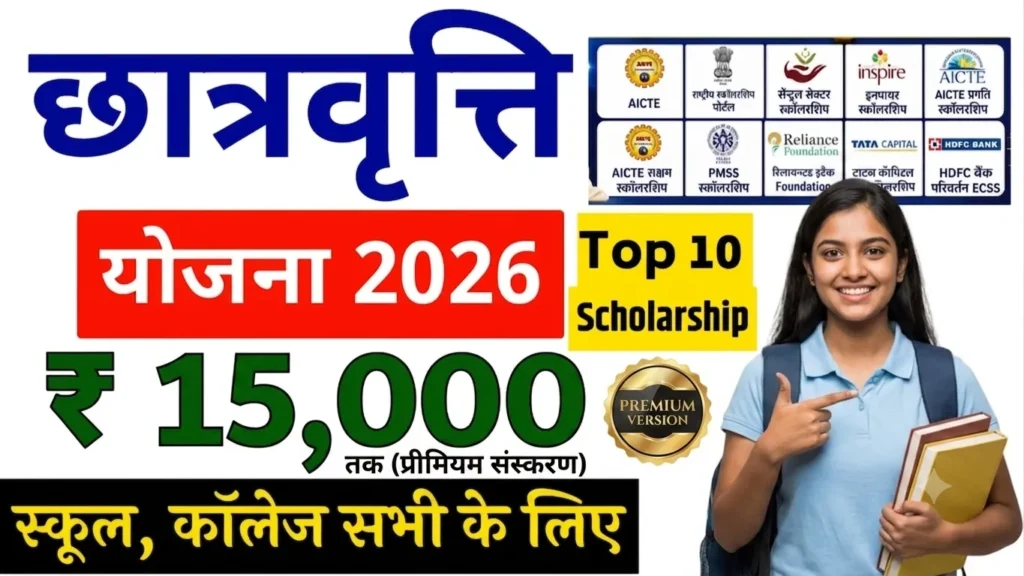
- HDFC Badhte Kadam Scholarship: Supports students facing financial crises or single-parent situations.
- Reliance Foundation Undergraduate Scholarships: Offers merit-cum-means assistance to students pursuing degree courses across India.
- Tata Capital Pankh Scholarship: Assists deserving students from low-income families in school and undergraduate programs.
C. STEM & Higher Research Fellowships
- Best for: Undergraduate, postgraduate, and PhD scholars in Science and Technology.
- Top Examples:
- INSPIRE Scholarship (DST): Funded by the Department of Science and Technology for students pursuing basic and natural sciences.
- PRAGATI Scholarship (AICTE): Dedicated exclusively to encouraging female students pursuing technical education (Diploma/Degree).
2. Step-by-Step Guide: How to Claim Scholarships in India
Securing a scholarship in India requires systematic preparation and adherence to official portals. Follow this checklist to ensure your application gets approved without delays:
Step 1: Keep Core Documents Ready
Indian scholarship portals strictly verify credentials. Before applying, ensure you have clear copies of the following:
- Income Certificate: Issued by competent state authorities (e.g., Tehsildar or SDM), usually valid for the current financial year.
- Caste / Category Certificate: (If applicable) Issued by the state government.
- Academic Marksheets: Class 10, Class 12, or your latest semester marksheets.
- Aadhaar Card: Must be linked with your active phone number and bank account.
- Bank Passbook Details: Ensure your bank account is active and Aadhaar-seeded for Direct Benefit Transfer (DBT).
- Fee Receipt & Bonafide Certificate: Provided by your school or college.
Important Note: Discrepancies between your name on your Aadhaar card, bank account, and educational certificates are the most common reason applications get rejected. Ensure all details match before applying.
Step 2: Use Official Indian Scholarship Portals
Instead of applying randomly on third-party blogs, register directly on trustworthy platforms:
- National Scholarship Portal (NSP): The single-window portal for all central government schemes, ministry awards, and AICTE grants.
- State Scholarship Portals: Portals like e-Kalyan, MahaDBT, SSP Karnataka, or UP Scholarship Portal handle state-specific post-matric and merit schemes.
- Verified Private Grant Platforms: Use reputable, transparent portals for CSR scholarships.
Step 3: Complete the Online Application & Aadhaar KYC
- Register on the portal using your mobile number and Aadhaar/Onetime Registration (OTR).
- Fill in your personal details, academic background, and institute details carefully.
- Upload all requested documents in the specified format and file size (usually PDF or JPEG under 200 KB).
Step 4: Verification by School/Institute
Once submitted online, print your application form and submit it alongside physical copies of your documents to your school or college’s Scholarship Nodal Officer.
- The institute verifies your admission status and forwards the application digitally to the state/district authorities.
Step 5: Track Application & Receive DBT Payment
After institutional verification, district officers conduct final checks. Upon approval, scholarship funds are transferred directly into your bank account via Aadhaar-enabled Payment System (AePS) / DBT. You can track the live status anytime through the NSP dashboard or Public Financial Management System (PFMS).
3. Avoid Common Pitfalls
- Avoid Applying at the Last Minute: Portals like NSP often experience heavy server downtime in the final days before deadlines.
- Never Pay Application Fees: Genuine scholarships, whether government or corporate CSR initiatives, never ask for application fees, registration charges, or processing money.
Final Thoughts
Scholarships across India are designed to turn educational dreams into reality regardless of financial constraints. By keeping your documents synchronized, applying through official channels like the NSP, and following up with your college nodal officer, you can confidently claim the funding you deserve.