Assam is once again battling one of its worst monsoon disasters in years. Since late June 2026, relentless rain has triggered flash floods and landslides across the state, with Dhemaji’s Jonai sub-division among the worst hit.
More than 7 lakh people across a dozen districts have been affected, and thousands of families, including over 2,100 children, have lost their homes and are now without shelter, food, or safe drinking water. Reported death tolls have climbed through the season as the situation evolved, underscoring how fast-moving and severe this year’s flooding has been.
Related Posts:
As waters rise and recede in waves, two forces have driven the relief response forward: swift government intervention and an outpouring of support from ordinary citizens, NGOs, and the Assamese diaspora.
Government Relief Measures in Assam
The state and central governments moved quickly once the scale of the disaster became clear. The Assam government has set up hundreds of relief camps offering temporary housing, food, drinking water, medical care, and sanitation services to displaced families.
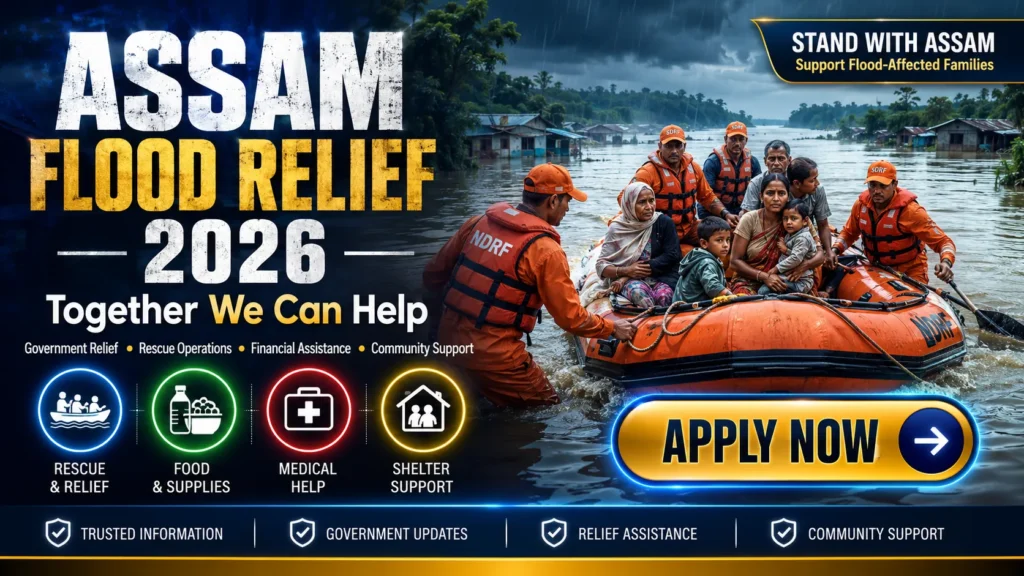
Following the Centre’s damage assessment, the National Disaster Response Force has rescued thousands of stranded residents, working alongside State Disaster Response Force teams using boats and inflatable rafts to reach villages cut off by floodwater.
Rescue and shelter are only the first steps. The state government has also announced additional ex-gratia payments and interim cash support for severely affected families, recognising that many households need direct financial help to survive the weeks between losing a home and rebuilding one. Beyond emergency cash, the government has rolled out longer-term support measures including subsidised land allotment through a dedicated land bank, concessional leases on government land, and exemptions from stamp duty and land conversion charges for affected families, alongside funding for repairing flood-damaged schools and educational institutions.
Public health teams have also been active on the ground, distributing purified water and halogen tablets, setting up sanitary toilets in relief camps, and deploying medical staff to prevent disease outbreaks — a critical concern once floodwaters begin to recede and stagnant water increases the risk of waterborne illness.
How Ordinary People and NGOs Are Helping
Government machinery alone cannot reach every flooded village fast enough, which is where community organisations and individual donors have stepped in. Since 23 July, the Akshaya Patra Foundation has been preparing and delivering hot, freshly cooked meals to families displaced by the floods from a centralised kitchen in Jorhat, now serving over 3,000 meals a day across seven flood-hit locations.
International and diaspora support has also been significant. The Assam Foundation of North America has partnered with locally registered organisations across multiple districts, channeling donor funds into relief kits and rehabilitation support for families in remote upper Assam villages such as Sivasagar and Charaideo. Save the Children’s India chapter and ActionAid Association have both launched emergency appeals, focusing on reaching thousands of the most vulnerable flood-affected families, including women, children, the elderly, and persons with disabilities, to help them rebuild their lives and livelihoods.
Corporate and celebrity voices have amplified these efforts too. IIFL Foundation mobilised local staff volunteers to distribute food and essential supplies to affected families in Dibrugarh district, while public figures like actor Anil Kapoor have used their platforms to direct followers toward verified relief campaigns, helping smaller NGOs reach a wider donor base during the critical early weeks of the crisis.
Why This Combined Response Matters
Assam’s geography makes it one of India’s most flood-prone states, with the Brahmaputra and its tributaries regularly overwhelming embankments during monsoon season. No single actor — government or civilian — can manage a disaster of this scale alone. Government resources provide the infrastructure, rescue capacity, and financial safety net; NGOs and individual donors provide the speed and flexibility to reach specific communities quickly, often before formal aid arrives.
Relief workers on the ground note that cash donations remain especially valuable in the early phase, since they let local teams purchase supplies from nearby markets rather than waiting for aid to be trucked in from elsewhere — and let priorities shift quickly as needs move from rescue toward recovery.
How You Can Help
If you’re looking to support Assam flood relief, consider donating to established, on-the-ground organisations with a track record in the region rather than unverified social media appeals. Look for groups that publish transparent updates on how funds are used, and where possible, choose organisations with FCRA registration if you’re donating from outside India.