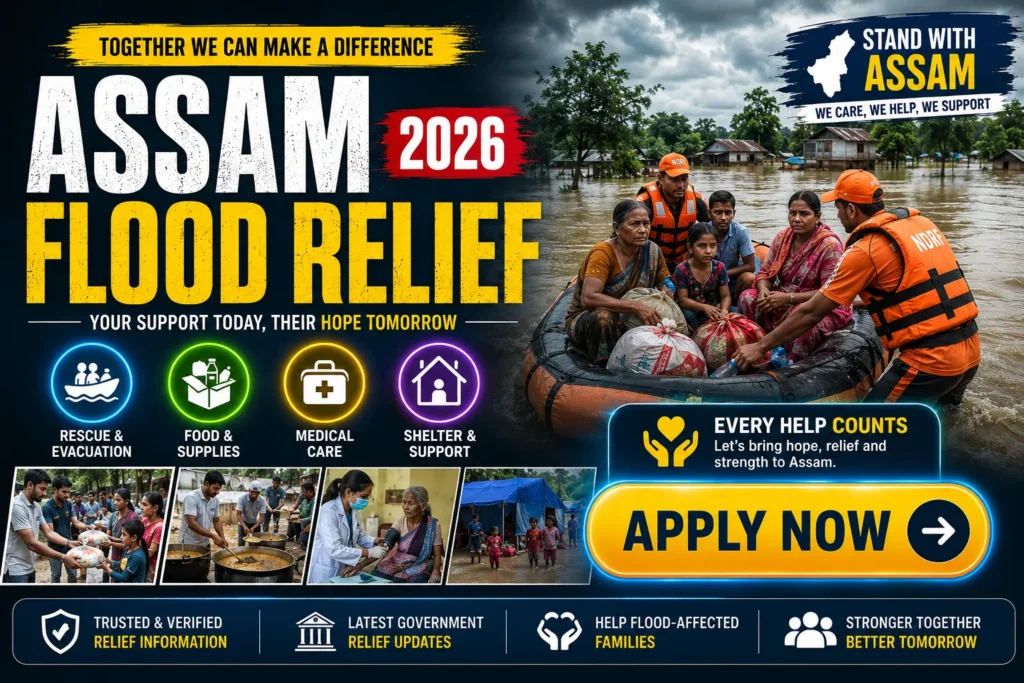
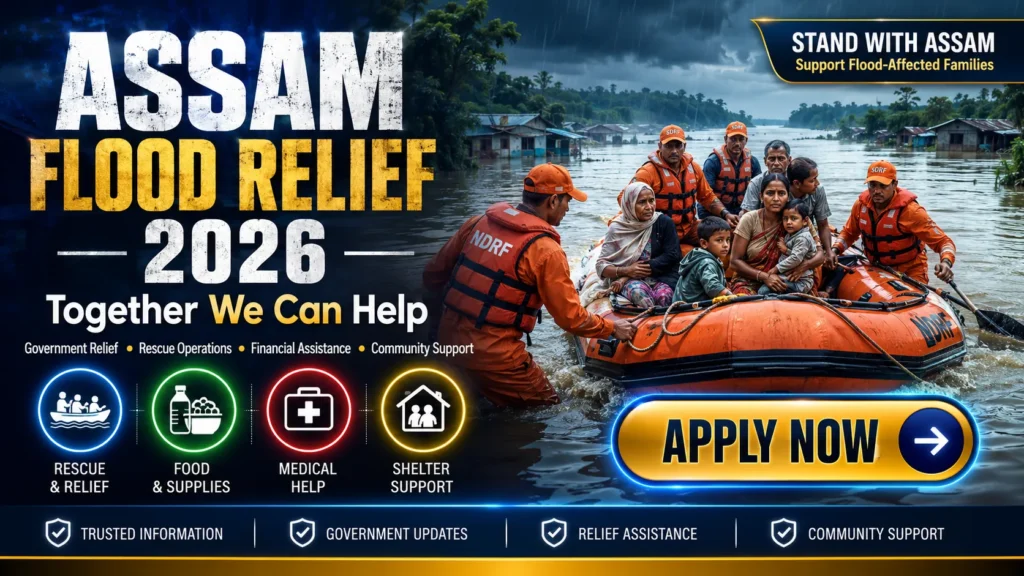
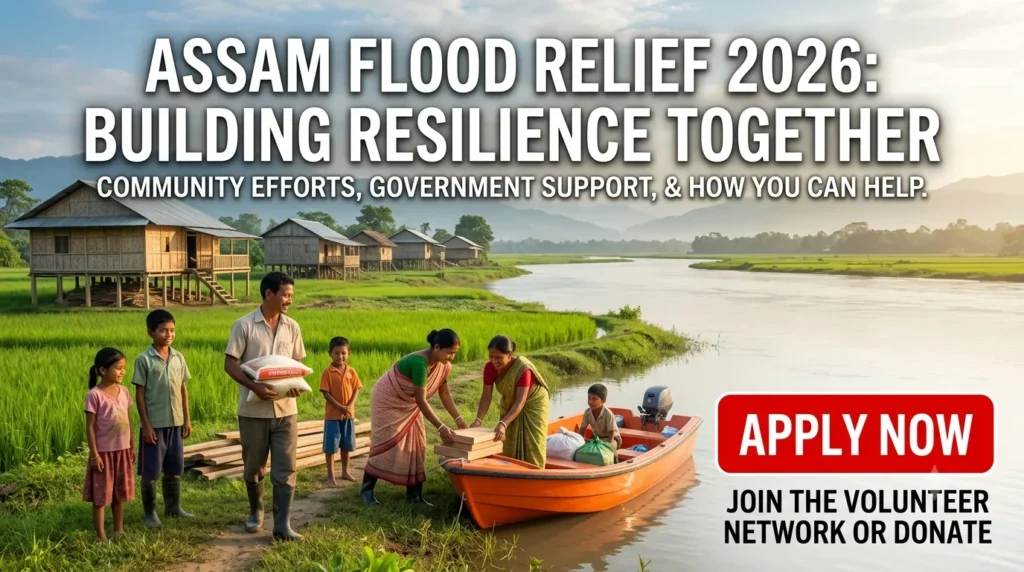
Every year, the monsoon season brings heavy rainfall to Assam, causing rivers such as the Brahmaputra and its tributaries to overflow. In 2026, several districts once again faced flooding, affecting thousands of families, damaging homes, roads, schools, and agricultural land. Floods not only disrupt daily life but also create challenges related to food, drinking water, healthcare, and education.
Despite these hardships, relief operations by government agencies, disaster response teams, non-governmental organizations (NGOs), volunteers, and local communities have provided much-needed support to affected families. Their combined efforts have helped rescue people, distribute essential supplies, and begin the process of recovery.
Impact of the Assam Floods
Related Posts:
Floodwaters can have devastating effects on both rural and urban communities. Many families are forced to leave their homes and move to temporary relief camps. Farmers often lose crops and livestock, while students face interruptions in their education due to damaged schools or inaccessible roads.
The major challenges during floods include:
- Damage to homes and public infrastructure.
- Loss of crops and livestock.
- Shortage of clean drinking water.
- Increased risk of waterborne diseases.
- Disruption of transportation and communication.
- Temporary displacement of families.
Recovering from these losses often takes several months, making timely relief and rehabilitation extremely important.
Government Relief Measures in 2026
The Government of Assam, along with the Government of India, has continued to strengthen disaster response mechanisms to reduce the impact of floods. Relief efforts are coordinated through state authorities, district administrations, and disaster management agencies.
Some of the major relief measures include:
Rescue Operations
Emergency teams, including disaster response personnel and local authorities, conduct rescue operations using boats and specialized equipment to evacuate stranded residents from flooded villages.
Relief Camps
Temporary relief camps are established to provide safe shelter for displaced families. These camps generally offer:
- Safe accommodation
- Cooked meals and dry ration
- Drinking water
- Basic medical care
- Sanitation facilities
Food and Essential Supplies
Government agencies distribute essential items such as:
- Rice
- Pulses
- Cooking oil
- Baby food
- Drinking water
- Blankets
- Clothing
- Hygiene kits
These supplies help families meet their immediate needs during the emergency.
Medical Assistance
Health teams organize medical camps to provide treatment, vaccinations, medicines, and health awareness programs. Special attention is given to preventing diseases that commonly spread after floods.
Financial Assistance
Eligible affected families may receive financial support according to applicable disaster relief guidelines issued by the concerned authorities. Assistance is generally provided after damage assessments conducted by local administration.
How Local Communities Are Helping
One of the most inspiring aspects of flood relief is the support shown by local communities. Residents from unaffected areas often come forward to help their neighbors through voluntary efforts.
Community support includes:
- Collecting food and clothing donations.
- Organizing community kitchens.
- Providing temporary shelter.
- Helping elderly people and children relocate safely.
- Cleaning villages after floodwaters recede.
- Assisting in rebuilding damaged homes.
Such community participation strengthens recovery efforts and provides emotional support to affected families.
Role of NGOs and Volunteers
Many charitable organizations and volunteer groups actively participate in flood relief operations. Their contributions often include:
- Distribution of food packets.
- Supply of clean drinking water.
- Medical assistance.
- Distribution of school supplies for children.
- Women’s hygiene products.
- Emergency shelter materials.
- Psychological support for affected families.
Young volunteers also help in packing relief materials, coordinating donations, and assisting rescue teams wherever required.
How Citizens Across India Can Help
People from different parts of the country can contribute to flood relief in several meaningful ways.
Some effective ways to help include:
Donate to Verified Relief Funds
Support only trusted government relief funds or well-known charitable organizations involved in disaster relief.
Donate Essential Items
Useful items include:
- Dry food
- Bottled water
- Blankets
- Clothing
- Medicines
- Hygiene products
- Baby care items
Always ensure donated items are clean, usable, and properly packed.
Volunteer
Individuals living near affected areas may volunteer with recognized organizations involved in relief and rehabilitation activities.
Spread Verified Information
Sharing only accurate and verified updates helps prevent rumors and ensures that affected people receive correct information about available assistance.
Challenges During Flood Relief
Flood relief operations often face several obstacles, including:
- Continuous rainfall.
- Washed-out roads and bridges.
- Remote villages becoming inaccessible.
- Limited communication networks.
- Health risks for rescue workers.
- Difficulty in transporting relief materials.
Despite these challenges, coordinated planning helps relief teams reach many affected communities.
Long-Term Flood Management
Experts continue to recommend long-term solutions for reducing flood damage in Assam. These include:
- Improved flood forecasting systems.
- Better embankment maintenance.
- River management projects.
- Afforestation in vulnerable areas.
- Climate-resilient infrastructure.
- Improved drainage systems.
- Community disaster preparedness training.
These measures can help reduce the impact of future floods while improving public safety.
Safety Tips During Floods
Residents should always follow official advisories during flood situations.
Important safety measures include:
- Stay away from fast-moving floodwater.
- Keep emergency supplies ready.
- Store important documents safely.
- Drink clean or boiled water.
- Avoid damaged electrical connections.
- Follow evacuation instructions from local authorities.
- Keep emergency contact numbers available.
Preparedness can significantly reduce the risk of injury and property loss.
Conclusion
The Assam Flood Relief 2026 efforts highlight the importance of cooperation between government agencies, disaster response teams, volunteers, NGOs, and local communities. Timely rescue operations, relief camps, food distribution, healthcare services, and rehabilitation support play a crucial role in helping affected families recover from natural disasters.